Wholesale Coffee Beans for Restaurants: A 2026 Guide
Oct 5, 2026
Table of Contents
- Why Wholesale Coffee Beans Matter for Your Restaurant
- What to Expect From a Restaurant Coffee Supplier
- Choosing Coffee Beans for a Commercial Espresso Machine
- Coffee Blends for Restaurants: Consistency Over Complexity
- Coffee Bean Storage for Restaurants: Keeping Freshness Locked In
- How to Work Out Your Cost Per Cup
- Training Staff and Planning Seasonal Menus
- Frequently Asked Questions
Last Updated: October 5, 2026
Why Wholesale Coffee Beans Matter for Your Restaurant
Wholesale coffee beans are the biggest lever you have over coffee quality, cost per cup, and whether customers order a second flat white.
At Baffled Coffee, we supply freshly roasted beans to cafés, offices and homes across the UK, and serve the same coffee daily in our own Portsmouth cafés.
Coffee is not a commodity you buy once and forget. Every two weeks your beans change, the roast date changes, and the grind needs adjusting.
What to Expect From a Restaurant Coffee Supplier
A good restaurant coffee supplier does three things: delivers fresh stock on a schedule you can plan around, keeps flavour consistent batch to batch, and answers the phone when your grinder jams at 8am on a Saturday.
How Trade Accounts and Pricing Actually Work
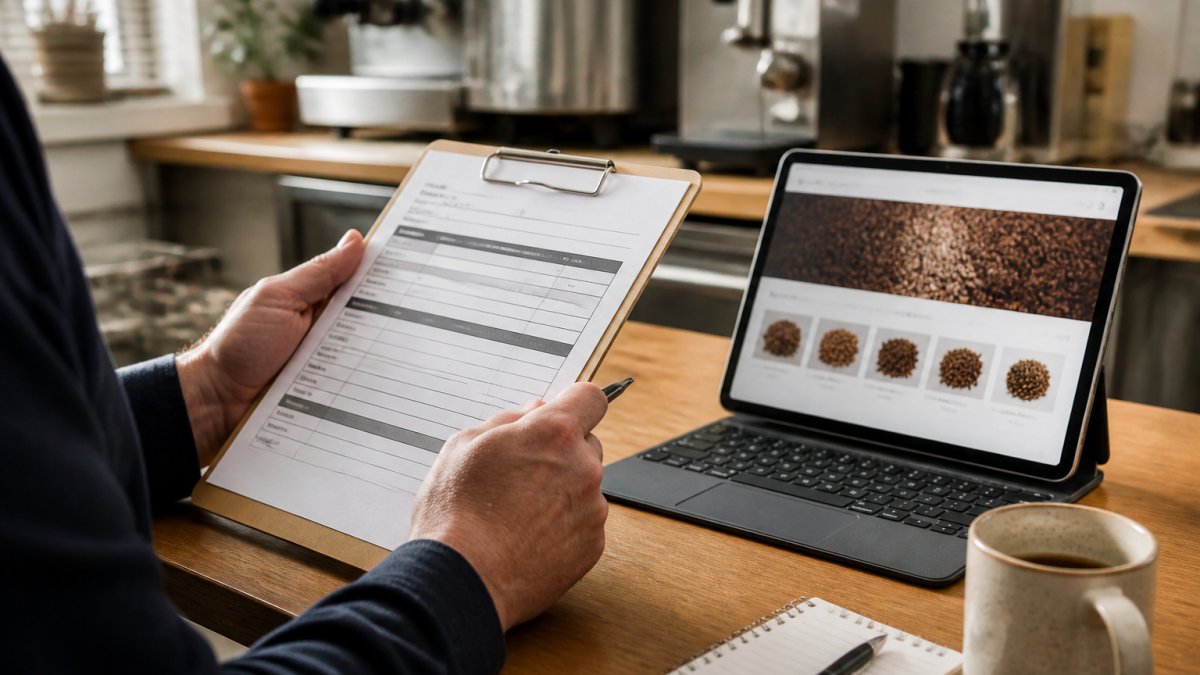
Most wholesale coffee suppliers run a trade account rather than a one-off checkout. You apply, they set you up, and pricing is usually tiered by volume. The tiers are not always published, so ask directly what the bands are and where the next price break sits.
Minimum order quantities vary widely: some suppliers ask for a minimum spend per delivery, others a minimum weight per order, and some waive it if you accept a fixed delivery schedule.
Delivery, Lead Times and What Happens When It Goes Wrong
Delivery frequency should match your usage, not the supplier's convenience. What matters is the lead time between ordering and arrival, and whether it holds up during busy periods.
Ask specifically:
- What is the cut-off time for an order to be included in the next dispatch?
- Is delivery on a fixed day, or can it flex?
- What is the process if a delivery is late or a bag arrives damaged?
- Is there a charge for delivery, and does it change with order size?
A supplier who roasts to order will usually have a slightly longer lead time than one shipping from warehouse stock. That trade-off buys fresher coffee for slightly less instant availability.
The Questions Worth Asking Before You Commit
Before you sign anything, get clear answers on these:
- What is the minimum order quantity, and does it change with frequency?
- Is the coffee roasted to order, or pulled from warehouse stock?
- What is the typical delivery lead time, and what happens if it is late?
- Can you supply decaf alongside your main blend?
- What grind options are available, and can you match our machine?
- Are there training or setup resources for our staff?
Pro Tip
Ask for the roast date on the bag, not just a "best before" date. A supplier who roasts to order will happily tell you when your coffee was roasted. One who cannot answer is sitting on stock.
Equipment and Machine Support
Coffee supply does not stop at the beans. Ask whether your supplier can advise on grind setting for your machine, offer setup support when you switch beans, and point you toward servicing or parts if something fails. A machine down at breakfast service is a lost morning, so knowing who to call matters.

Ethical Sourcing and Sustainability
More restaurants are being asked by customers where their coffee comes from. A supplier should be able to tell you the origin of each component in a blend, and whether the coffee is sourced through recognised certification schemes or direct relationships. You do not need a lecture, just a straight answer you can pass on to your team and customers.
Choosing Coffee Beans for a Commercial Espresso Machine
Commercial espresso machines are less forgiving than home setups: hotter, faster, and pushing through far more coffee per day. Beans that taste fine in a cafetière can turn harsh under that pressure.
The practical answer is to pick a blend built for espresso, then dial in your grind to match.
A medium roast blend with balanced body handles milk well and holds up across the day.

Why Grind Profile Matters More Than You Think
Grind profile is the size and consistency of the ground coffee your grinder produces. It decides how fast water moves through the coffee, and how the cup tastes.
If your espresso runs too fast, the grind is too coarse. Too slow, too fine.
The most common mistake we see is a restaurant buying pre-ground coffee to "save time". Pre-ground coffee starts losing aroma within minutes and you lose all control over extraction.
Watch Out
Never store beans in the hopper overnight if you can avoid it. Beans in a hopper are exposed to air and light, and the first shots of the next morning will taste flatter. Grind to order where possible.
Coffee Blends for Restaurants: Consistency Over Complexity
For most restaurants, blends beat single origin every time. Blends are built to taste the same all year, which is exactly what a menu needs.
At Baffled Coffee, our House Blend is the one we serve every day, built from Central American, South American and Asian beans for a smooth, balanced cup with chocolate and roasted nut notes. It works black, with milk, and across espresso, cafetière, filter and AeroPress.

Blend or Single Origin? A Simple Decision Framework
Use this to decide quickly:
- High-volume service, milk-based drinks, fixed menu: choose a blend.
- Specialty café with rotating menu and curious customers: consider a single origin as a guest option.
- You want one coffee that does everything: choose a blend.
- You want to showcase a specific farm or region: single origin, but expect seasonal variation.
| Option | Best For | Consistency | Milk Pairing |
|---|---|---|---|
| House Blend | Everyday espresso and milk drinks | High | Excellent |
| Dark Roast Blend | Strong, traditional flavour | High | Excellent |
| Medium Roast Blend | All-day, black or milk | High | Good |
| Single Origin | Specialty menus, black coffee | Varies by harvest | Varies |
Coffee Bean Storage for Restaurants: Keeping Freshness Locked In
Coffee bean storage for restaurants is simple: keep beans whole, sealed, cool, and away from light.
Oxygen, heat, moisture and light are the four things that flatten coffee. A sealed bag with a one-way valve, stored cool and dry, holds its flavour for several weeks after roasting.
Buy in quantities you will use within a few weeks rather than months.
Key Takeaway
The best storage decision you can make is ordering the right amount, not finding the perfect container. Match your order size to your weekly usage.
How to Work Out Your Cost Per Cup
Cost per cup is the number that tells you whether your coffee is profitable. Most restaurants never calculate it, then wonder why margins feel thin.
Here is the formula:
Cost per cup = (cost per kilogram ÷ grams per shot) × shots per drink
Worked example using a 1kg bag of our Wholesale House Blend Beans at £180.00:
- A double espresso uses roughly 18g of coffee.
- 1,000g ÷ 18g = about 55 double shots per kilogram.
- £180.00 ÷ 55 = roughly £3.27 per double shot in coffee cost.
- Add milk, cup, and labour to get your true cost.
That number is your baseline. From there you can see what a price change does to your margin, and whether a cheaper bean actually saves money once waste and inconsistency are factored in.
Pro Tip
Weigh your shots for a week. Most kitchens find they are using 20-25% more coffee than they thought, usually through inconsistent dosing and purged shots.
Training Staff and Planning Seasonal Menus
Barista training and seasonal menus separate a restaurant with good coffee from one with great coffee. This section is about what happens after the delivery arrives.
A Simple Staff Training Programme
Training does not need to be complicated or expensive. It needs to be repeatable, so a new starter can be brought up to speed without the whole programme falling apart.
A practical structure looks like this:
- Session one: the basics. How to turn the grinder on and off, how to set the grind, how to dose and tamp consistently, and how to start and stop a shot. Keep it to the machine and the grinder, nothing else.
- Session two: tasting. Pull three shots on purpose: one too fast, one too slow, one dialled in. Taste all three. Staff who can taste the difference will fix problems themselves instead of calling a manager.
- Session three: milk. Texturing milk is where most restaurant coffee falls down. Practise until the milk is glossy and pourable, not stiff and bubbly.
- Session four: cleaning. A dirty machine tastes like a dirty machine. Show the group head clean, the backflush, the steam wand wipe, and the daily and weekly tasks.
A short session at setup, plus a refresher whenever you change beans, covers most of it. Keep a one-page sheet by the machine with the current grind setting, dose weight and target extraction time.
Equipment Maintenance Schedules
Few suppliers talk about this, and it is one of the biggest pain points for restaurant managers. Commercial machines need regular upkeep, and a missed task shows up in the cup.
A workable schedule:
- Daily: flush the group head, wipe and purge the steam wand, empty and rinse the drip tray, knock out and rinse the portafilter.
- Weekly: backflush with cleaning powder, soak and clean the portafilter and baskets, clean the grinder hopper and burrs of old grounds.
- Monthly: deep clean the group head and shower screen, check the grinder burrs for wear, descale if your water is hard.
- Annually (or per manufacturer guidance): professional service, seal and gasket replacement, and a full grinder service.
Water quality is the quiet killer here. Hard water scales up a boiler and changes how the machine performs. In a hard water area, a filter or softener is not a luxury, it is maintenance.
Seasonal Menu Planning That Actually Sells
Seasonal menus are where coffee becomes a profit centre. A spiced latte in autumn, an iced coffee range in summer, a festive blend in December. These give regulars a reason to order something other than their usual, at a higher price point.
The mechanics matter more than the idea. Plan a quarter ahead, decide which two or three drinks you will push, and work out what beans and syrups you need before you commit.
A simple rotation:
- Spring: lighter, fruitier options, iced drinks start to appear.
- Summer: cold brew, iced lattes, a single origin for black coffee drinkers.
- Autumn: spiced and flavoured lattes, a medium roast as the house default.
- Winter: darker roasts, festive blends, hot chocolate and coffee crossovers.
Why This Matters for Your Supply
Training and menu planning both feed back into what you order. If your staff can dial in a grinder, you waste less coffee. If your menu is planned, you order the right beans at the right time.
If you are sourcing wholesale coffee beans for restaurants in the UK, look for a supplier who will support the training and maintenance side, not just drop bags at the door.
Frequently Asked Questions
How do restaurants choose coffee beans?
Start with what your customers actually order. If most drinks are milk-based, a medium roast blend with chocolate and nut notes holds up well. If you serve a lot of black coffee, a slightly brighter single origin can work. Order small samples first, run them through your commercial espresso machine, and taste them as you would serve them. Consistency across batches matters more than chasing a trendy flavour.
What should restaurants look for in a wholesale coffee supplier?
Look for clear roast-to-order practices, reliable delivery times, and someone who can answer questions about grind profile and storage. A good restaurant coffee supplier will offer a wholesale account with transparent wholesale pricing, not just a discounted retail listing. Ask how they handle reorders during busy periods and whether they provide any barista training or equipment maintenance guidance.
How should restaurants store coffee beans?
Keep beans in an airtight container away from heat, light and moisture. Do not tip them into a hopper days ahead of use. For coffee bean storage for restaurants, the practical rule is to open only what you will use within a few days. If you buy 1kg bags, decant into smaller containers and reseal properly. Never store beans in the fridge or freezer once opened.
Can restaurants buy freshly roasted coffee beans wholesale?
Yes. Many independent roasters and roasting partners supply freshly roasted wholesale coffee beans for restaurants, usually with roast dates printed on the bag. The key is to confirm the roast-to-order schedule and delivery lead time so beans arrive close to their peak. If a supplier cannot tell you when your beans were roasted, that is a warning sign.