Best Coffee Beans for Home Espresso: 2026 Guide
Oct 4, 2026 (Updated on Oct 7, 2026)
Table of Contents
- How to Choose the Best Coffee Beans for Home Espresso
- Espresso Grind Size Guide: Getting the Setting Right
- Single Origin vs Blend for Espresso: Which Suits Your Machine?
-
Our Picks: Best Coffee Beans for Home Espresso
- How to Choose Between Them
- Cost Per Cup: What You're Actually Paying
- Freshness Is the Real Premium
- For a Balanced Everyday Shot: House Blend
- For a Bold, Smoky Shot: Ark Royal Dark Roast
- For an All-Rounder That Works With Milk: Dauntless
- For a Smooth Medium-Dark Cup: Resolute
- For Evenings and Low Caffeine: Mountain Water Decaf
- A Note on Water Before You Buy
- Dialling In Your Espresso Machine
- Storing Espresso Beans So They Stay Fresh
- Conclusion: Start With Fresh Beans and Simple Settings
- Frequently Asked Questions
Last Updated: October 4, 2026
How to Choose the Best Coffee Beans for Home Espresso
Finding the best coffee beans for home espresso comes down to three things: freshness, roast level and how you grind them.

At Baffled Coffee, we've spent years making and serving espresso in our cafés, so we know how much difference the right beans — and a few simple adjustments — can make to a home espresso.
Below, we'll break down what actually matters, then give you five beans we'd happily put in our own hoppers, plus simple dialling-in steps.
Key TakeawayFreshness matters enormously. A good, freshly roasted coffee will often make a better espresso than a much more expensive bag that's been sitting around for months. Buy fresh, buy an amount you'll actually use, and pay attention to the roast date.
What Actually Matters: Freshness, Roast Level and Grind
Bean freshness is the biggest single factor in espresso quality. Coffee is perishable: after roasting, beans lose aroma and complexity through oxidation and degassing, mostly in the first few weeks.
Roast level matters just as much. Espresso pushes water through coffee at high pressure in under 30 seconds, so the roast needs enough development to dissolve properly.
Grind is the third pillar, covered in the next section.
Espresso Grind Size Guide: Getting the Setting Right
Espresso grind size should look like fine table salt, clumping slightly when you pinch it. If it feels like powder, you've gone too fine; if it feels gritty like caster sugar, too coarse. That's the starting point. The rest of this section is about why grind matters so much, and how to adjust it without chasing your tail.
Why Grind Controls Everything
Espresso works by forcing water through a compacted bed of coffee at pressure, and the grind sets how much resistance that bed offers.
The window between under-extracted and over-extracted is narrow. On a typical home setup, one or two clicks on the grinder can shift a shot from sour to balanced to harsh.
The Numbers That Actually Matter
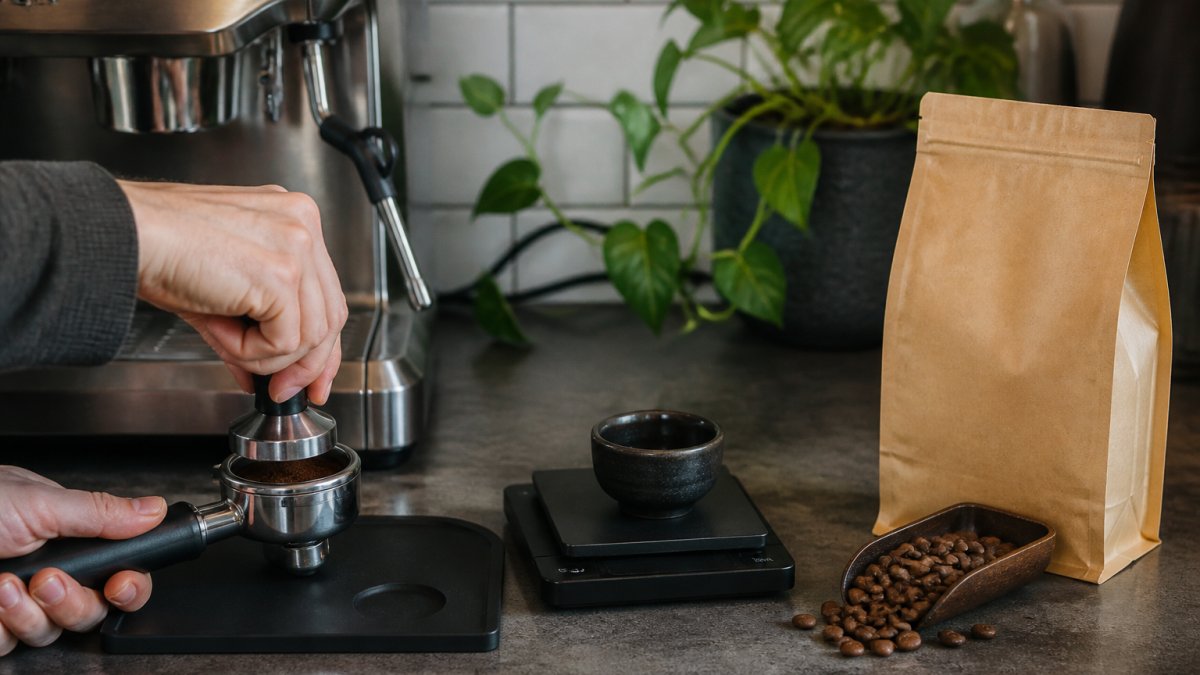
A good starting point for most home machines is a 1:2 ratio: 18 g of ground coffee in, around 36 g of espresso out, in 25 to 30 seconds. That's a baseline, not a rule, some beans taste better at 1:1.5, and some light roasts need 1:2.5 and a longer shot.
Adjust one variable at a time:
- Shot runs under 20 seconds, tastes sour or thin: grind finer
- Shot runs over 35 seconds, tastes bitter or harsh: grind coarser
- Shot tastes sour and bitter at once: the grind is uneven, check your grinder burrs or your distribution
Burr Grinders vs Blade Grinders
A conical burr grinder will outperform a blade grinder every time, because it produces consistent particle sizes.
Flat burr grinders produce a narrower particle distribution than conical burrs, which suits lighter roasts and clarity-focused espresso. Conical burrs give a slightly wider spread, which many find more forgiving with medium and dark roasts.
Grind Setting Drifts, Here's Why
Even with the same beans and grinder, your setting will need small tweaks over time. Three reasons:
- Bean age. As beans degas over the first week or two after roasting, they offer less resistance, so you may need to grind slightly finer to keep the same shot time.
- Humidity. Damp air makes grounds clump and slows the shot; dry air does the opposite.
- Grinder burr seasoning. New burrs settle in over the first few kilos of coffee and the setting shifts gradually.
This is why a fixed recipe doesn't exist: the recipe is a starting point, and your taste and timer are the real controls.
Pro TipChange one thing at a time. If you adjust grind and dose together, you'll never know which one fixed the shot. We keep a notebook in the café for exactly this reason, a simple note of bean, dose, time and taste is worth more than any app.
A Quick Word on Water
Grind gets most of the attention, but water chemistry has just as much influence on what ends up in the cup. Water that's too hard (high in calcium and magnesium) over-extracts and tastes chalky; water that's too soft under-extracts and tastes flat. If your shots taste consistently dull or harsh no matter how you adjust the grind, check the water next.
Single Origin vs Blend for Espresso: Which Suits Your Machine?
Single origin vs blend for espresso is really a question about consistency versus curiosity.
Blends win for most home setups.
Single origins suit drinkers who want to explore. Expect more acidity, more distinctive flavour, and more sensitivity to grind and dose.
Our honest take: start with a blend. Move to single origins once your dialling-in is consistent.
Our Picks: Best Coffee Beans for Home Espresso
Here are five beans we'd recommend from our own range, matched to how you actually drink your coffee. Every bag is roasted to order by our roasting partner and packed fresh.
Bean |
Roast |
Tasting Notes |
Best For |
|---|---|---|---|
House Blend |
Medium |
Chocolate, roasted nut, subtle sweetness |
Everyday balanced shots |
Dark |
Deep chocolate, smoky, full-bodied |
Strong black coffee and milk drinks |
|
Dauntless |
Medium-dark |
Cocoa, toasted nut, rounded sweetness |
All-rounder, works with milk |
Resolute |
Medium-dark |
Gentle sweetness, rounded finish |
Smooth medium-dark cup |
Mountain Water Decaf |
Medium |
Smooth, chocolate, caramel |
Evenings, low caffeine |
How to Choose Between Them
Most people overthink this. The right bean is the one you'll actually finish before it goes stale, brewed the way you actually drink it. A few practical questions cut through it:

- Do you drink milk drinks most mornings? Go medium-dark. House Blend, Dauntless or Resolute all hold their character through milk without turning bitter.
- Do you drink it black and strong? Ark Royal. The dark roast gives you the body and low acidity that black espresso needs.
- Do you brew more than one way? Dauntless works through espresso, cafetière, filter and AeroPress, so you're not buying two bags.
Cost Per Cup: What You're Actually Paying
A useful way to compare beans is cost per cup, not cost per bag. A standard double shot uses around 18 g of coffee, so a 1 kg bag gives you roughly 55 double shots, and a 250 g bag around 13.
What matters more than the headline price is how much of the bag you actually use.
Freshness Is the Real Premium
If you take one thing from this section, make it this: a freshly roasted medium blend will beat a stale premium single origin in every shot. Roast date matters more than origin, price or the label on the bag. Look for a roast date, not just a best-before date, best-before tells you nothing useful about espresso.
For a Balanced Everyday Shot: House Blend
Our House Blend is the coffee we serve every day in our cafés and the one we'd recommend as the easiest starting point for home espresso. It's balanced enough to drink as an espresso or Americano, with enough body and sweetness to work really well through milk in a flat white or cappuccino.
For a Bold, Smoky Shot: Ark Royal Dark Roast
If you prefer your espresso darker and more intense, Ark Royal is the one to try. It's a dark roast with plenty of body and a bolder flavour, making it particularly good for cappuccinos, lattes and other milk-based coffees where you still want to taste the coffee.
For an All-Rounder That Works With Milk: Dauntless
Dauntless is a great choice if you want an easy-going everyday espresso that works particularly well with milk. It’s a versatile coffee for households making a mixture of flat whites, cappuccinos, lattes and straight espresso, without going as dark and punchy as Ark Royal.
For a Smooth Medium-Dark Cup: Resolute
Resolute is for anyone who likes a fuller, richer espresso without going all the way to a dark roast. Its medium-dark roast gives you plenty of body for milk-based drinks while still working nicely as a straight espresso or Americano. A good choice if you want something with a little more punch than a typical medium roast.
For Evenings and Low Caffeine: Mountain Water Decaf
If you want proper espresso without the caffeine, our Mountain Water Decaf is the obvious choice. It uses the Mountain Water Process to remove the caffeine without relying on the harsher flavour profile people sometimes associate with decaf. It works well through an espresso machine and means you don't have to compromise on your evening coffee.
Watch OutDecaf needs a slightly finer grind than regular beans. The decaffeination process makes beans a little more porous, so shots can run fast if you use the same setting.
A Note on Water Before You Buy
Before you spend more on beans, check your water. Espresso is roughly 98% water, and hard water will mute even a great bean. If your kettle furs up quickly, your espresso is probably over-extracting and tasting chalky. A simple filter jug or bottled water with moderate mineral content can transform a shot more than upgrading the bean ever will, the most under-discussed variable in home espresso, and almost free to fix.
Dialling In Your Espresso Machine
Dialling in means adjusting your grinder until the shot tastes right. Start with 18 g of coffee, aim for 36 g out in 25 to 30 seconds, then taste and adjust.
Work through it in this order:
- Set your grinder to a medium-fine starting point
- Pull a shot and time it
- If it runs fast and tastes sour, grind finer
- If it runs slow and tastes bitter, grind coarser
- Once timing is right, adjust dose slightly to fine-tune sweetness
- Taste again after any change, and only change one thing at a time
Small adjustments go a long way. On most grinders, one or two steps is enough to shift a shot from sour to balanced.
Storing Espresso Beans So They Stay Fresh
Store beans in an airtight container, in a cool dark cupboard, and use them within a few weeks of the roast date. That's it, no fridge, no freezer, no fancy canisters doing more than a simple clip-top jar.
The enemies of freshness are oxygen, heat, light and moisture. Keep beans away from all four and they'll hold their character far longer.
Pro TipFreeze beans only if you're storing them for more than a month, and freeze them in the bag they arrived in, sealed. Thaw fully before grinding, never straight from the freezer.
Conclusion: Start With Fresh Beans and Simple Settings
The gap between mediocre and excellent home espresso is rarely the machine. It's fresh beans, a consistent grind and a shot you've actually timed.
If you're not sure where to start, our House Blend is the safest first bag, and Ark Royal is the one to try if you like it strong.

Shop Coffee and get freshly roasted beans through your door.
Frequently Asked Questions
What coffee beans make the best espresso?
There is no single bean that suits every setup. Medium and medium-dark roasts tend to work well for home espresso because they balance sweetness, body and bitterness. Blends give consistency; single origins can offer more distinct flavour. Freshness matters most: beans roasted to order and used within a few weeks of the roast date will taste noticeably better than supermarket stock that has sat on a shelf.
What is a good starting recipe for home espresso?
A good starting point is 18g of ground coffee in and around 36g of espresso out in roughly 25–30 seconds. Don't treat those numbers as strict rules — different beans, machines and personal tastes will need slightly different settings. If the shot runs quickly and tastes thin or sour, try grinding finer. If it runs slowly and tastes harsh or bitter, try grinding coarser. Adjust one thing at a time and let taste be the final judge.
Should I choose a single origin or a blend for espresso?
Blends are designed for consistency, which makes them easier to dial in and more forgiving when you change coffee. Single origins can be more interesting but often need more adjustment. If you want a reliable daily shot, start with a blend; if you enjoy experimenting with flavour, try a single origin once your routine is settled. Either way, buy whole bean and grind fresh for the best results.
How does roast profile affect home espresso?
Lighter roasts tend to be brighter and more acidic, and they can be harder to extract evenly without channelling. Darker roasts are easier to extract, with more body and less acidity, which is why they suit milk drinks well. Medium roasts sit in the middle and are a good starting point for most home setups. Adjust one variable at a time when you change roast level.
Why is freshness important when buying coffee beans online?
Coffee loses aroma and flavour as it ages, especially once exposed to air, light and heat. Beans roasted to order and delivered quickly will still be within their best window when they arrive. Check the roast date on the bag rather than a best-before date, and aim to use beans within about two to four weeks of roasting for espresso. Store them in an airtight container away from light.