
Monsoon Malabar Coffee: A Guide to India's Unique Bean
Sep 29, 2026 (Updated on Oct 2, 2026)
Table of Contents
- What Is Monsoon Malabar Coffee?
- The Monsooning Process: How These Beans Get Their Character
- The Flavour Profile: Earthy, Mellow, and Low in Acidity
- Best Brewing Methods for Low Acidity Coffee
- Who Will Enjoy Monsoon Malabar Coffee?
- Monsoon Malabar vs Standard Arabica: What's the Difference?
- Frequently Asked Questions
Last Updated: September 29, 2026
What Is Monsoon Malabar Coffee?
Monsoon Malabar coffee is an Indian single origin whose beans are deliberately exposed to humid monsoon winds for weeks, a process that swells them, strips their acidity and leaves a heavy, mellow cup. This guide explains where it comes from, how it is made and how to brew it.
The result is unlike any other arabica you will taste. Beans that would normally carry bright, sharp fruit notes come out earthy, spicy and smooth, closer to dark chocolate and pipe tobacco than citrus. That transformation happens before the beans ever reach a roaster.
Monsoon Malabar comes from the Malabar Coast, the strip of western coastline running through Karnataka and Kerala. It is a washed arabica, historically the region's main export crop, and its modern character is a direct result of how it was once shipped. The Coffee Board of India's origin information documents the growing regions and the export history that shaped this style.
Most supermarket coffee is chosen for consistency and price. This one is chosen for character.
The Monsooning Process: How These Beans Get Their Character
Monsooning is a controlled re-creation of a sea voyage. Harvested, washed and dried beans are stored in open-sided warehouses along the Malabar Coast during the monsoon months, where humid sea air moves through them for several weeks. The beans absorb moisture, swell by roughly a fifth of their original size, fade from green to pale gold, and lose much of the chlorogenic acid that gives coffee its bite.
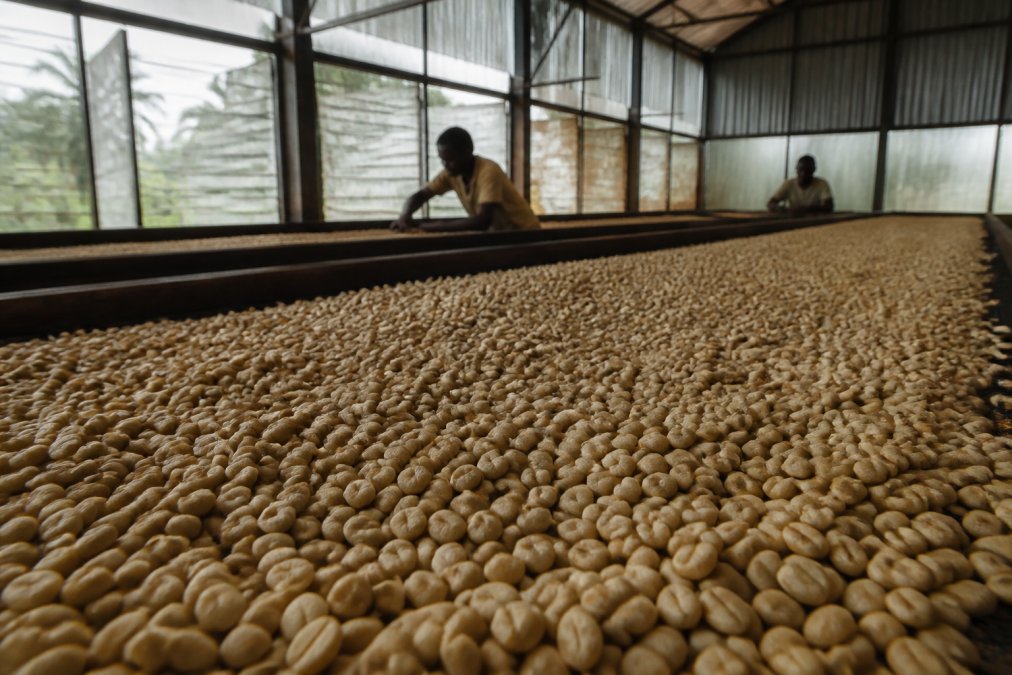
The original version happened by accident. When coffee was sailed from India to Europe in wooden hulls, the damp air in the hold did the work over months at sea. Once shipping improved and the journey shortened, the beans arrived unchanged and buyers complained, so producers began replicating the conditions on land.
The stages run roughly like this:
- Harvesting and curing: ripe cherries are picked, pulped, washed and dried to a stable moisture content
- Warehousing: beans are spread in layers in open warehouses during the monsoon
- Turning: workers rake the beans regularly so every batch is exposed evenly
- Swelling and yellowing: the beans take on moisture, expand and change colour over several weeks
- Re-drying and grading: the beans are dried back down and sorted before export
Pro TipMonsooned beans are softer and more porous than standard arabica, so they grind differently. If you use the same setting as your usual beans, expect a faster flow and a thinner shot. Adjust finer by a notch or two and dial in from there.
The Flavour Profile: Earthy, Mellow, and Low in Acidity
The typical cup is earthy and woody first, with spice and dark chocolate underneath, a soft nuttiness, and a faint smokiness on the finish. Treacle-like sweetness replaces the sharp fruit you would get from a Kenyan or Ethiopian coffee. There is very little brightness.
Monsoon Malabar vs standard Indian arabica, side by side
It is more useful to taste Monsoon Malabar against a standard washed Indian arabica, such as a Karnataka or Chikmagalur lot, because the contrast shows exactly what monsooning does.
Sensory marker |
Monsoon Malabar |
Standard washed Indian arabica |
|---|---|---|
First impression |
Earthy, woody, faint smoke |
Clean, mild fruit, soft floral |
Mid-palate |
Dark chocolate, baking spice, treacle |
Citrus, stone fruit, light caramel |
Acidity |
Low, rounded, almost absent |
Medium, gentle but present |
Body |
Heavy, syrupy |
Medium, lighter texture |
Finish |
Long, mellow, tobacco-tinged |
Shorter, cleaner, slightly drying |
With milk |
Holds its character, no sourness |
Can turn thin or slightly sour |
What to eat with it
Because the cup leans woody, spicy and tobacco-like rather than fruity, it pairs with food a bright single origin would clash with.
- Dark chocolate with sea salt or a cocoa-heavy brownie: the bitterness meets the earthy notes rather than fighting them
- Gingerbread, parkin or a spiced fruit cake: the baking-spice character in the cup lines up with the spice in the bake
- A slice of mature cheddar or a hard, nutty cheese: the savoury, faintly smoky finish works where a fruity coffee would taste jarring
- A plain oat or digestive biscuit: neutral enough to let the treacle sweetness show
- Smoked or cured meats, if you drink coffee alongside a savoury plate: the tobacco note in the finish is the bridge
A few things worth knowing before you buy:
- It is not a complex, fruit-forward coffee, and it is not trying to be
- Some drinkers love it immediately, others take a bag to warm to
- It holds up well with milk and sugar because there is no sharpness to fight through
- Freshness matters more than usual, since the soft bean loses its best qualities faster than a hard, dense arabica
Watch OutDo not judge monsooned coffee on a single brew. Its low acidity and heavy body can read as flat if you brew it too weak or too cool. If your first cup tastes dull, tighten the ratio before you decide the coffee is not for you.
Best Brewing Methods for Low Acidity Coffee
The best brewing methods for low acidity coffee reward body over clarity. Monsoon Malabar shows best in methods that let its weight and sweetness come through without adding bitterness. Because the bean is softer and more porous than a standard arabica, it extracts faster and can turn bitter or hollow if you brew it like a hard, dense coffee. The parameters below are starting points, not rules.
Method |
Grind |
Dose |
Water |
Temp |
Time |
What you get |
|---|---|---|---|---|---|---|
Espresso |
Fine |
18g |
36g out |
90-92C |
28-32s |
Dark chocolate, spice, thick body |
Cafetiere |
Coarse |
30g |
500ml |
92-94C |
4 min |
Full body, soft and rounded |
Moka pot |
Fine-medium |
18g |
150ml |
Off the boil |
Until it gurgles |
Dense, syrupy, intense |
Aeropress |
Medium-fine |
16g |
220ml |
88-92C |
2 min |
Rich but cleaner finish |
Filter |
Medium |
60g/L |
1L |
92-94C |
3-4 min |
Mellow, easy drinking |
Getting the Coffee Grind Size for Cafetiere Right
Coffee grind size for cafetiere should be coarse, roughly the texture of sea salt, so the metal mesh can filter it without the grounds slipping through. Too fine and you get sludge and a bitter, over-extracted brew; too coarse and the water runs straight past the grounds, leaving a weak, hollow cup.
Key TakeawayTreat Monsoon Malabar as a fast-extracting bean: coarser grind, cooler water, and taste-led adjustment. Get those three right and the heavy, sweet, low-acid character comes through in every method on the list.
Who Will Enjoy Monsoon Malabar Coffee?
Monsoon Malabar suits drinkers who want a smooth, low-acid cup with weight and warmth, and who are happy to trade brightness for comfort. If you take your coffee with milk, drink it in the evening, or find most single origins too sharp, this is a strong candidate.
Best ForDrinkers who take milk, prefer low acidity, and want a big, mellow cup that is easy to get right at home.
Monsoon Malabar vs Standard Arabica: What's the Difference?
Standard arabica is dense, green-blue, and carries the acidity and fruit that most speciality coffee is built around. Monsoon Malabar is pale gold, softer, larger, and far lower in acidity, with an earthy, spicy profile instead of a bright one. Same species, very different cup.
The table below sets out the practical differences.
Trait |
Monsoon Malabar |
Standard Arabica |
|---|---|---|
Colour |
Pale gold to straw |
Green to blue-green |
Size |
Swollen, larger |
Standard |
Density |
Lower, softer |
Higher, denser |
Acidity |
Low |
Medium to high |
Body |
Heavy |
Light to medium |
Flavour |
Earthy, spicy, dark chocolate |
Fruity, floral, bright |
Best for |
Espresso, milk drinks, cafetiere |
Filter, pour-over, espresso |
Frequently Asked Questions
What is Monsoon Malabar coffee?
Monsoon Malabar is a distinctive Indian coffee from the Malabar Coast. The beans are exposed to humid monsoon winds during drying, which makes them swell, turn pale golden, and lose much of their acidity. The result is a heavy-bodied, earthy coffee with notes of dark chocolate and spice. It is a single origin, not a blend, and is prized for its smooth, mellow character.
What does Monsoon Malabar coffee taste like?
It has a heavy body, low acidity, and a smooth, mellow flavour. Expect earthy and woody notes, a hint of dark chocolate or treacle, and a gentle spiciness. There is often a subtle smokiness and a soft nuttiness. It is not a bright or fruity coffee; instead, it is rounded and comforting, with a long finish that works well in milk drinks or on its own.
Is Monsoon Malabar coffee low in acidity?
Yes. The monsooning process reduces the beans' natural acidity significantly. This makes it a good choice for anyone who finds standard arabica too sharp or who prefers a gentler cup. The low acidity also means it can be brewed in a cafetiere without turning bitter, as long as you use the right grind size and water temperature.
Which brewing methods work best for Monsoon Malabar?
It suits espresso, filter, and French press. For filter, use a medium grind and a 1:16 ratio. For cafetiere, a coarse grind and a 1:15 ratio work well. Espresso benefits from a slightly finer grind and a 1:2 ratio. Because it is low in acidity, it is forgiving across methods, but avoid over-extracting it, as the earthy notes can become muddy.
Trying a coffee this distinctive is the fun part. The challenge is finding a bag that has been roasted recently enough to show what monsooning actually does, rather than one that has spent months on a shelf. Baffled Coffee's Monsoon Malabar is roasted to order by our roasting partner, sold as whole bean or ground to order, and shipped quickly across the UK, with free delivery over £35. If you have been curious about India's most unusual coffee, this is an easy place to start.